
Practice
Use the method through ready-made material.
Your product may say delivered, resolved, issued, confirmed, approved, completed, escalated, or AI answered. That signal is not proof that the relied-upon promise was kept.
Start with the toolkit or video seminar. Apply the method to one real status label through self-serve material.
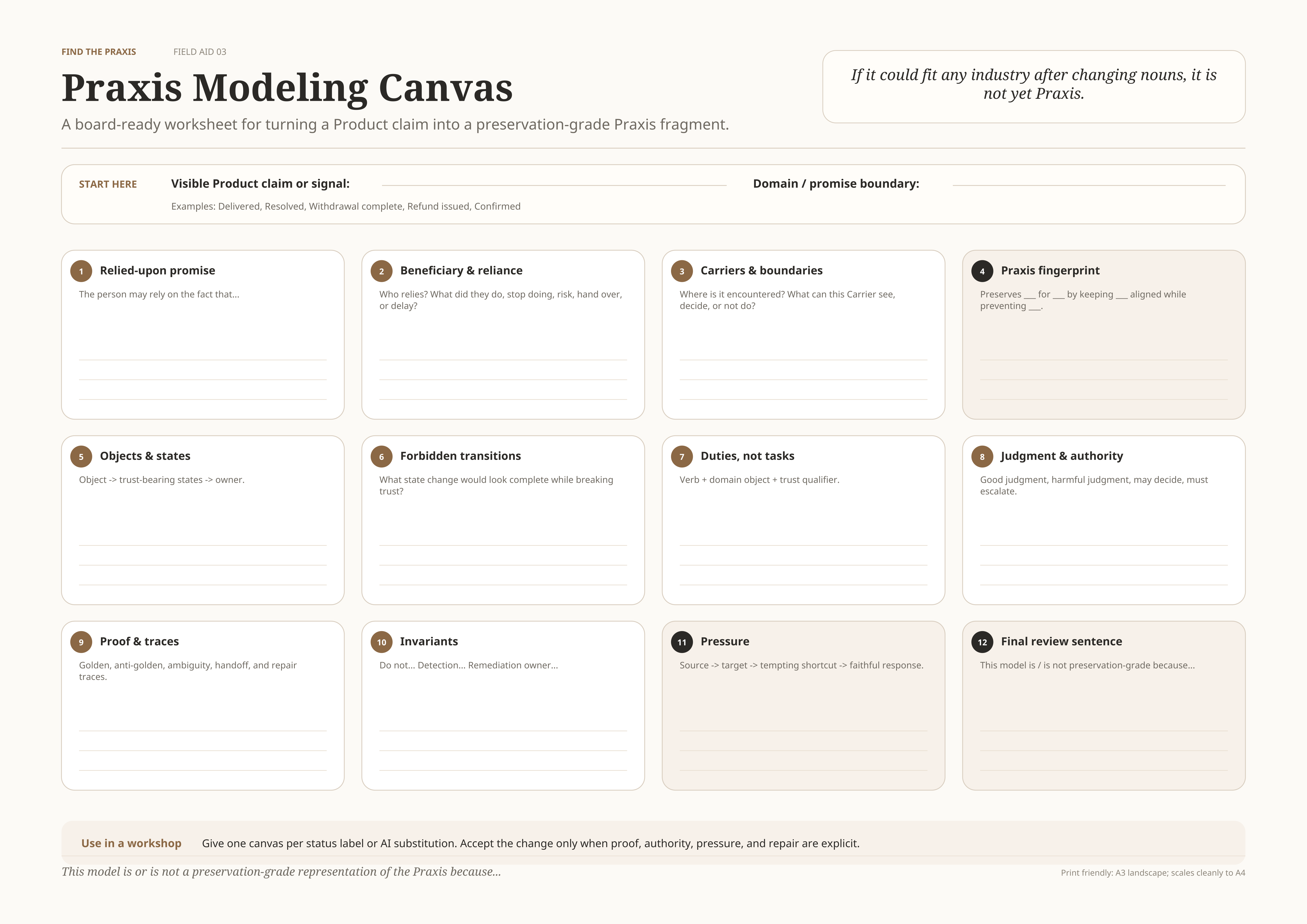
Signals
Bring one signal your team may trust too early.
Start with the status label. Then test whether it actually witnesses a kept promise.
resolved
issued
confirmed
approved
completed
escalated
AI answered
Public proof
Start from a teardown that already shows the method.
These cases are public examples of the signal, promise, carrier, proof, betrayal, and pressure map used in the toolkit and video seminar.
Delivery
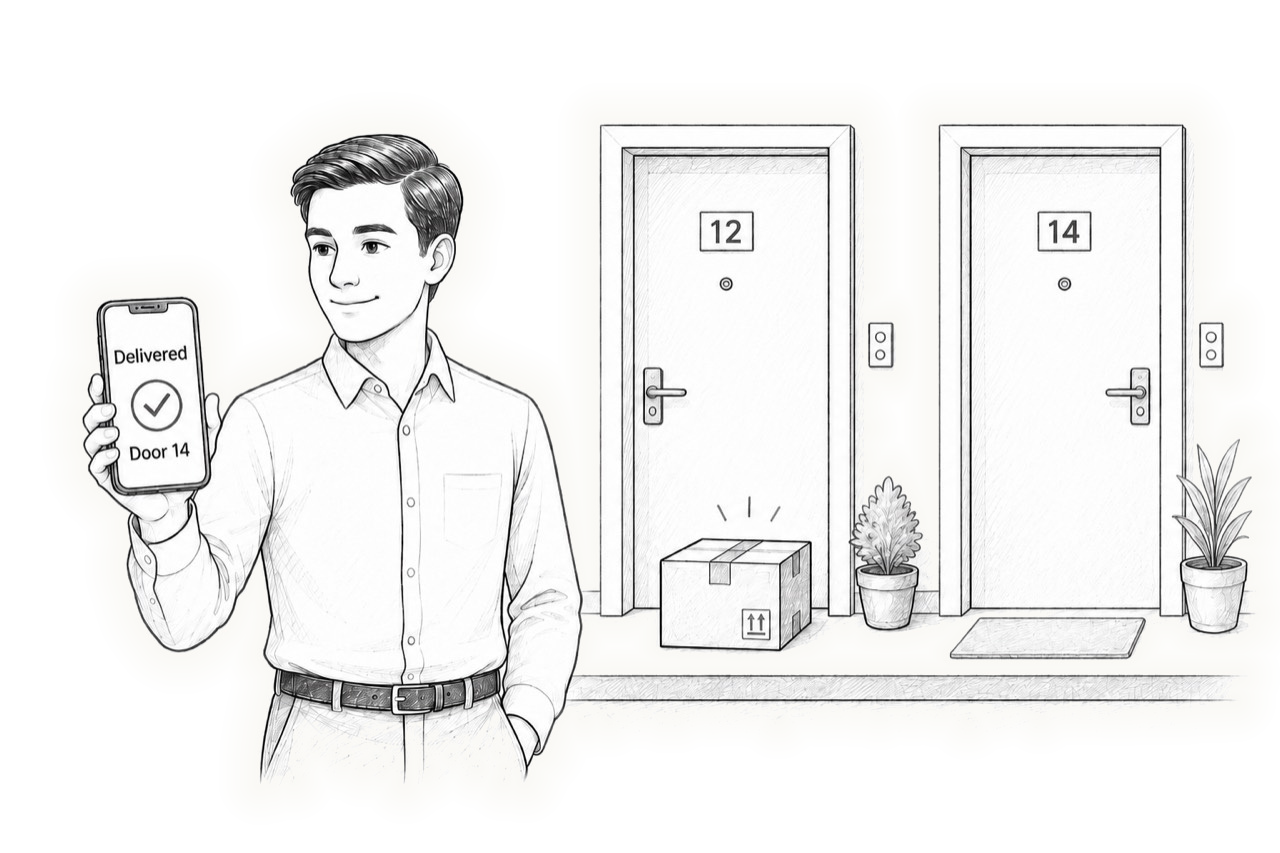
Delivered Is Not Proof
- Signal
- Delivered
- Relied-upon promise
- The package reached a customer-accessible place.
- Missing proof
- Reliable evidence that the package reached the correct place.
Support
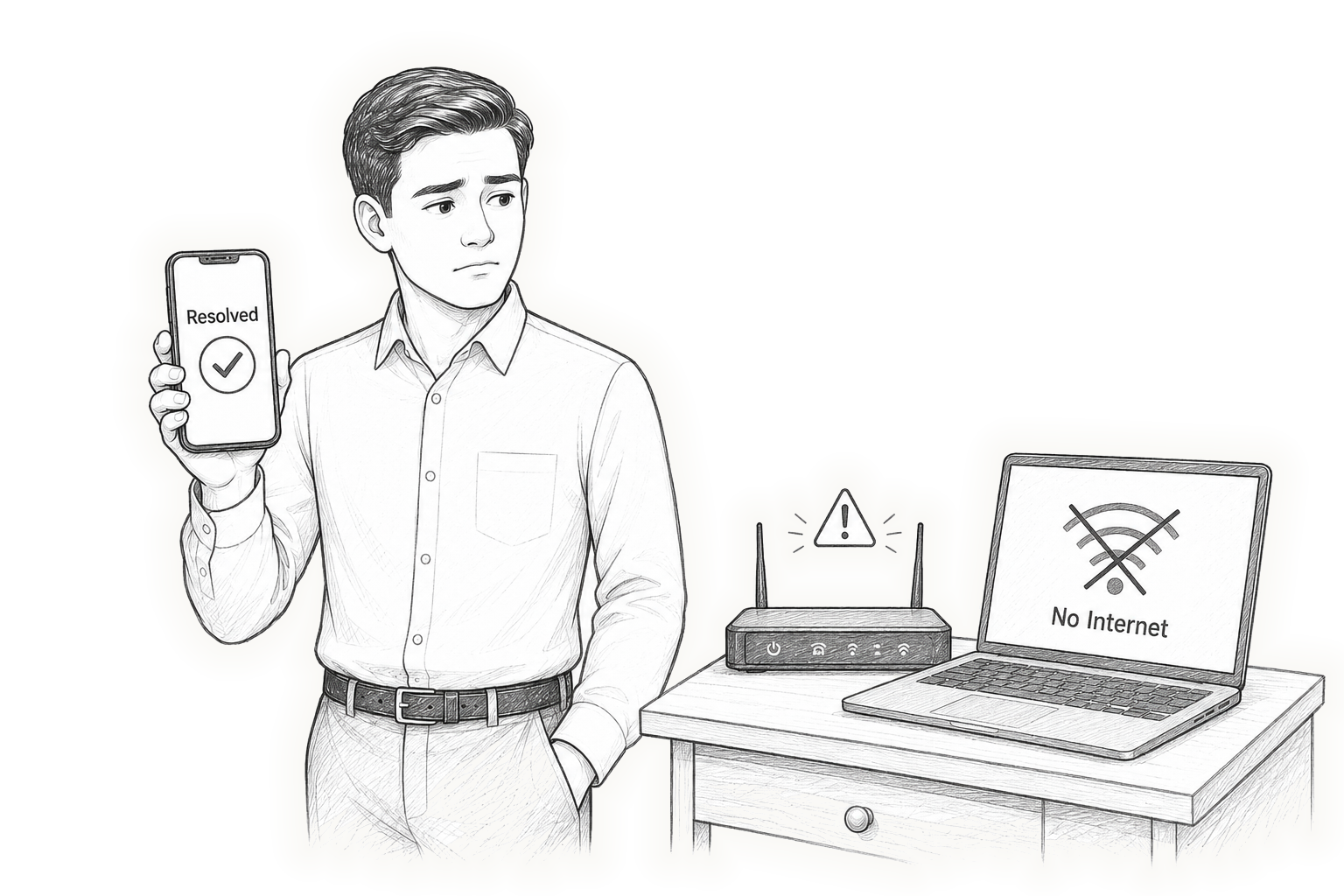
Resolved Is Not Repaired
- Signal
- Resolved
- Relied-upon promise
- The customer's problem was fixed or honestly remains open.
- Missing proof
- Customer-visible evidence that the original problem no longer persists.

AI
AI Answered Is Not AI Resolved
- Signal
- AI answered
- Relied-upon promise
- The user received a trustworthy answer, action, escalation, or refusal.
- Missing proof
- Evidence that the answer was true, sufficient, owned, or escalated.
Practice material
Use the book as reference. Use the material to apply the method.
Start with a self-serve diagnostic asset, then move into visual training or team access when the method needs to be shared.
Digital
Product Trust Praxis Toolkit
For practitioners, consultants, founders, and small teams that want to apply the method without scheduling a live session.
- 7-question Praxis Check
- Green Checkmark Audit
- Praxis Canvas
- AI Product Promise Checklist
- worked teardown example
- team discussion guide
- video seminar worksheet
Video
Product Trust Video Seminar
A no-face, voice-led seminar with diagrams, pictures, examples, and a worksheet for inspecting one workflow signal.
- the product signal
- the relied-upon promise
- the carrier where the promise is encountered
- what proof would show the promise was kept or validly refused
- how the product can look successful while the promise fails
- what pressure makes the failure more likely
- one concrete repair or next test
Team
Team video seminar license
For teams that need shared access to the recorded material and a bounded internal-use agreement.
- team access grants
- seat-limited viewing
- organization and expiry terms
- internal-use agreement
- toolkit access when included
Access request
Start with one workflow.
Use this form for toolkit interest, individual video seminar access, or team video seminar access. The strongest requests name a real moment where someone relied on a product signal and became exposed if the signal was wrong.
Who this is for
Teams responsible for promises under pressure.
Product managers whose workflows show success while customers still suffer.
CX and support leaders dealing with false resolution or reopened cases.
AI product teams separating answer, authority, evidence, and repair.
UX and service designers who need more than journey maps.
Operations leaders responsible for handoffs, proof, and ownership.
Founders who want product trust built before scale exposes cracks.
Consultants who need a sharper diagnostic method for client work.